*This post may contain Amazon affiliate links or affiliate links from other companies, which means The Musically Sound earns a percentage of sales from any qualifying purchases at no additional cost to the buyer. Learn more on our Private Policy page.
Americana music is less of a strict genre and more of a musical blend. Americana mixes elements of folk, country, bluegrass, blues, and roots rock. Americana music bucks rigid rules in favor of freedom of expression.
You’ll often hear:
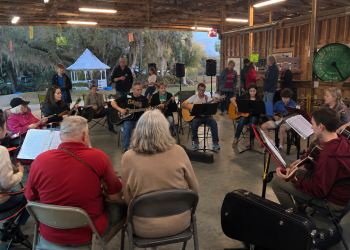
- Acoustic guitar, banjo, fiddle, or mandolin
- Lyrics rooted in real-life storytelling
- Simple, expressive arrangements
If it sounds honest, rooted, and a little weathered, in the best way, it likely falls under the Americana music genre.
Banner Photo: Back View of Musicians with Guitars; © adanvdo / Pexels free use
What makes Americana different from classic country or folk?
What makes Americana music differ from other standard genres is the artistic approach and intention. Classic country, especially the Nashville sound, is generally centered on polished production and radio-friendly structures. The themes of the songs are centered on traditional country life. Alternatively, pure folk music tends to preserve historical traditions. It can cover political causes, tell intricate stories, or relay a cultural message rooted in a specific community or movement.
Americana music sits somewhere in the middle of the two. It focuses on singer-songwriter storytelling and artistic freedom over commercial appeal. Artists in this space often use country or folk instrumentation but apply it to deeply personal, modern narratives that don’t fit neatly into either category. The result is a sound that feels timeless but contemporary, rooted but unbound by genre expectations.
Popular Americana artists and why they fit the genre
Jason Isbell uses country instrumentation like steel guitar, but approaches songwriting with a rock sensibility. His lyrics are deeply personal, modern narratives. He doesn’t stick to traditional country themes. His work captures the emotional rawness of Americana music without the polish of mainstream Nashville.

Gillian Welch and David Rawlings are deeply rooted in old-time, bluegrass, and Appalachian music. Their stark, intimate approach lacks the commercial production of modern country, giving them a retro sound as if it could have been recorded decades ago. Yet it speaks directly to contemporary listeners who enjoy authenticity.
Brandi Carlile merges folk songwriting with rock vocals and roots-based storytelling, blurring lines between rock, country, and pop-folk. Her ability to cross genres while maintaining an Americana sensibility has made her one of the most recognizable voices in the scene.
Tyler Childers often gets labeled country, but his raw sound and rejection of the mainstream Nashville machine place him firmly in the Americana camp. He focuses on traditional bluegrass and Appalachian songwriting, delivering stories that feel lived-in rather than calculated for radio play.
Lucinda Williams combines blues, rock, and country songwriting with a grit and lyrical focus that fits better with alternative roots than traditional country radio. Her unflinching honesty and worn-in vocal delivery embody what Americana music represents at its core.
The Foundation: Where Americana Began
While the term “Americana” gained traction in the 1990s, the sound itself has roots that stretch back much further. The Band, a foundational group from the late 1960s and early 1970s, created an eclectic mix of folk, rock, and blues that essentially established the sonic blueprint for the genre. Their approach, blending American musical traditions into something that felt both timeless and entirely new, laid the groundwork for what we now recognize as Americana music.
The Bottom Line
Americana music thrives in the space where tradition meets individuality. It’s country without the Nashville sheen, folk without the rigid preservation rules, and roots rock without losing sight of where it came from. If an artist is telling honest stories using American musical traditions and doing it on their own terms, you’re likely hearing Americana.
*This post may contain Amazon affiliate links or affiliate links from other companies, which means The Musically Sound earns a percentage of sales from any qualifying purchases at no additional cost to the buyer. Learn more on our Private Policy page.